Settlement Videos: How Visuals Drive Faster & Higher Settlements

Settlement evaluation begins the moment a demand is opened.
Adjusters, defense counsel, and claims professionals are not simply reviewing documents—they are forming early impressions about exposure, credibility, and potential case value based on how the information is presented. In practice, this first review often shapes how the case is handled internally, influencing reserve setting, risk assessment, and the overall posture going into negotiation. The structure of the presentation—what is seen first, how information is organized, and how easily it can be followed—plays a direct role in how efficiently and completely the case is understood.
Settlement videos help establish that structure from the outset by organizing the key components of a case into a single, guided presentation. Instead of requiring the reviewer to interpret multiple documents independently and reconstruct the sequence of events, the video presents the case in a logical progression that reflects how the incident occurred and how the injuries developed over time.
This allows reviewers to:
- Move through the case in a clear, step-by-step sequence
- Understand how liability, injuries, and damages are connected
- Identify key facts without navigating multiple sources
- Form an initial evaluation based on a complete presentation
When the case is presented in this format, the connections between incident, injury, and long-term impact are easier to follow from the very beginning.
By establishing a structured and complete first impression, settlement videos help shape early valuation, reduce uncertainty during review, and support stronger initial positioning—contributing to faster alignment and higher settlement potential.
Supporting Early Case Evaluation
Settlement videos support early case evaluation by structuring how information is introduced, connected, and reviewed during the first pass through the demand. Rather than presenting facts across separate documents that require independent interpretation, the video arranges those facts into a continuous, structured narrative that reflects the progression of the case.
This approach allows adjusters, defense teams, and carriers to move through the case in sequence—beginning with how the incident occurred, transitioning into how the injuries developed, and then showing how those injuries affect the plaintiff’s daily life. Each component is introduced with context, reducing the need to interpret isolated pieces of information or revisit materials multiple times to establish connections.
By consolidating key elements into a single presentation, settlement videos reduce fragmentation during review. Opposing parties are able to evaluate liability, damages, and supporting evidence together, rather than assembling those components across multiple documents.
This helps reviewers:
- Review the case in a logical and uninterrupted flow
- Understand the progression from incident to injury to outcome
- Evaluate key facts without repeated cross-referencing
- Form a more complete picture of the claim during the initial review
A more complete first review reduces delays caused by follow-up analysis, supports earlier internal alignment on exposure, and helps move the case more efficiently toward meaningful settlement discussions.
Creating a Visual Foundation for the Case
Settlement videos function as a visual foundation that supports and organizes the written components of a demand package. Rather than replacing reports, records, or expert findings, the video provides a structured layer that connects those materials into a unified presentation.
Through careful sequencing, the video establishes how the incident occurred, outlines the timeline of events, and connects those events to the resulting injuries and conditions. This creates a consistent reference point that allows all supporting documentation to be understood in relation to the overall case.
When defense counsel or insurance representatives review medical records, expert reports, or supplemental exhibits, they can relate those materials back to the visual presentation. This reinforces how each piece of evidence contributes to the broader understanding of liability and damages.
Settlement videos help establish this foundation by:
- Structuring the sequence of events leading to the injury
- Connecting medical findings to the underlying incident
- Organizing documentation into a cohesive presentation
- Providing a central reference point for evaluation
By aligning all materials within a single visual framework, settlement videos reduce misinterpretation, support consistent valuation across reviewers, and strengthen the overall presentation of damages—contributing to more confident and higher settlement positioning.
Supporting Expert Analysis and Case Arguments
Expert analysis often involves detailed technical findings that require context to fully understand how conclusions are reached. Settlement videos help present this analysis in a format that allows claims professionals and defense teams to follow the underlying reasoning step by step.
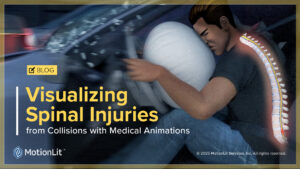
Through medical illustrations and accident reconstruction animations, the video can demonstrate how an incident occurred, how forces were applied, and how those forces translated into specific injuries. These visual sequences provide context for expert opinions, allowing the viewer to see how conclusions are supported by the underlying facts.
Rather than reviewing expert findings in isolation, settlement videos align those findings with visual representation, helping connect:
- Reconstruction data with incident sequence
- Medical opinions with injury development
- Supporting documentation with visual context
When expert analysis is presented in a structured visual format, it becomes easier to evaluate and apply during review, reducing disputes over interpretation and supporting stronger acceptance of liability and damages—key factors in reaching higher and more efficient settlements.
Presenting the Plaintiff’s Condition and Daily Impact
Settlement videos provide a detailed view of how injuries affect the plaintiff’s daily life by showing those effects in real-world settings over time. Through day-in-the-life footage, the video captures how the plaintiff moves through daily routines, highlighting physical limitations, reliance on assistance, and changes in independence.
This footage is often supported by interviews with family members, coworkers, and caregivers who provide additional context. These perspectives help illustrate how the plaintiff’s condition impacts not only individual tasks, but also relationships, responsibilities, and overall quality of life.
By presenting this information visually, evaluators are able to observe:
- Changes in mobility and physical function
- Daily routines and limitations
- Ongoing care needs and assistance
- The broader impact on independence and lifestyle
Showing the real-world impact of injuries helps fully convey the scope of damages, supporting a more complete evaluation of non-economic loss and contributing to higher settlement outcomes.
Establishing Liability and Causes of Action Visually
Settlement videos help present liability by organizing the sequence of events leading to the incident in a structured visual format. This may include recreating vehicle movement in collision cases, illustrating environmental conditions in premises liability matters, or demonstrating contributing factors in other types of incidents.
By presenting these elements step by step, the video shows how the incident developed and how specific actions or conditions led to the outcome. This structured sequence allows defense teams and claims reviewers to follow the progression of events without needing to reconstruct the timeline independently.
Settlement videos support liability presentation by:
- Demonstrating movement, timing, and positioning
- Illustrating environmental or situational conditions
- Showing contributing factors leading to the incident
- Connecting the incident directly to resulting injuries
Clearly presenting cause and effect supports stronger liability positioning, reduces ambiguity during evaluation, and helps accelerate agreement on responsibility—contributing to faster and more favorable settlements.
Supporting Damages Claims Through Structured Presentation
Settlement videos help present damages by organizing multiple categories of loss into a format that connects documentation with lived experience. This includes both economic damages, such as medical treatment and care, and non-economic damages related to physical limitations and lifestyle changes.
By structuring these elements together, the video shows how treatment, recovery, and long-term impact are connected. Carriers and opposing counsel are able to review how each component contributes to the overall claim, rather than evaluating damages in isolation.
Settlement videos support damages presentation by:
- Connecting medical treatment to ongoing limitations
- Showing how injuries affect daily activities
- Presenting long-term care needs and considerations
- Organizing damages into a clear, reviewable format
Presenting damages in a structured and connected format helps support a more complete valuation of the claim, reinforcing the full scope of loss and contributing to stronger settlement outcomes.
Presenting Before-and-After Context
Settlement videos provide a structured comparison between the plaintiff’s life before and after the incident. By incorporating background information alongside current conditions, the video presents a clear view of how the plaintiff’s lifestyle and level of independence have changed.
This comparison is developed through personal history, prior routines, and pre-incident activities, followed by current limitations and daily challenges. Presenting these elements side by side helps illustrate the scope of change in a way that is organized and easy to follow.
Settlement videos highlight this transition by:
- Showing pre-incident lifestyle and activity levels
- Presenting post-incident limitations and adjustments
- Comparing independence before and after injury
- Demonstrating long-term changes in daily life
This before-and-after context helps quantify the impact of injuries over time, strengthening how damages are understood and supporting higher valuation during settlement discussions.
Improving the Flow of Negotiation
A structured visual presentation helps support a more efficient negotiation process by organizing key information in advance. When liability, injuries, and damages are already presented in a cohesive format, discussions can remain focused on evaluating the case rather than assembling information.
Settlement videos provide a consistent reference point that can be used throughout discussions, helping maintain alignment between plaintiff counsel, defense, and carriers. With key facts already presented in sequence, communication becomes more direct and focused.
This contributes to:
- More efficient internal review by carriers
- More focused mediation discussions
- Reduced need for repeated clarification
- Streamlined communication throughout negotiation
By reducing friction in communication and keeping discussions focused, settlement videos help shorten negotiation timelines and support more efficient resolution.
Reinforcing Case Preparation and Presentation Quality
Settlement videos reflect the level of preparation and organization behind a case. By bringing together evidence, expert findings, and testimony into a single presentation, the video demonstrates how each component has been developed and aligned.
This consistency supports a clear and organized review process. When all materials follow the same structure, the case is easier for adjusters, defense counsel, and evaluators to review without misinterpretation.
Settlement videos reinforce presentation quality by:
- Aligning evidence, expert analysis, and testimony
- Maintaining consistency across all materials
- Structuring information in a logical sequence
- Supporting a cohesive case presentation
A well-structured presentation signals preparation and credibility, reinforcing confidence in the claim and supporting stronger settlement positioning.
Structuring the Case for Better Outcomes
Settlement videos bring together evidence, testimony, expert analysis, and visual context into a single, structured presentation. By organizing these elements into a format that can be reviewed in sequence, they support a more complete understanding of the case from the beginning.
Each component is presented in relation to the others, allowing adjusters, defense counsel, and evaluators to assess liability, damages, and long-term impact as part of a unified case. This structure supports a more consistent evaluation process and helps move discussions forward with a shared understanding of the key facts.
Settlement videos help:
- Organize the full scope of the case into one presentation
- Support a complete and consistent evaluation
- Present liability and damages in relation to each other
- Provide a structured format for decision-making
When the case is structured this way, it supports stronger positioning, faster alignment between parties, and improved potential for higher settlement outcomes.
Present Your Case with MotionLit
If you’re preparing a settlement demand and want to present liability, damages, and plaintiff impact in a structured visual format, MotionLit can support your team from concept through final delivery.
Our settlement videos are built to organize complex case materials into a cohesive presentation that aligns your evidence, expert analysis, and damages into a format that can be reviewed, understood, and evaluated from the start.
By structuring your case visually, MotionLit helps you present the full scope of your claim in a way that supports clearer evaluation, stronger positioning, and more efficient resolution.
Learn more at: https://motionlit.com/
Schedule a consultation at: https://motionlit.com/contact/