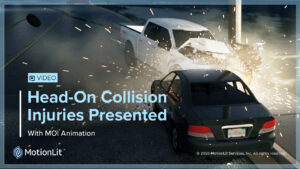
In multimillion-dollar premises liability claims, the burden of proving negligence rests on establishing the property owner’s duty of care, identifying the hazardous condition, and connecting the resulting injuries to the alleged breach of that duty. MotionLit’s expert-supported Mechanism of Injury animations help transform disputed facts, premises defects, and injury mechanics into compelling visual presentations that reinforce liability arguments, demonstrate causation, and substantiate the full extent of the damages being claimed.
In slip-and-fall litigation, the sequence of the fall can be critical to presenting liability, causation, and damages. Showing the hazard, the loss of balance, the movement of the body, and the point of impact helps establish how the incident unfolded and how the injuries occurred. Mechanism of Injury animations add a powerful visual layer to these cases by recreating the incident sequence and connecting the dangerous condition to the resulting bodily harm.
MotionLit develops Mechanism of Injury animations that recreate the environment, identify the hazard, and follow the injured person’s movement through the fall. By presenting the fall step by step, the animation helps connect the conditions at the scene with the physical mechanics of the incident and the injuries being presented. This gives attorneys another visual tool for supporting liability, causation, and damages throughout mediation, settlement negotiations, and trial.
When surveillance footage is available, the signature MotionLit Photo-Matching technique aligns the 3D animation with the original footage, matching camera perspectives, environmental details, and key moments of the fall. This comparison helps validate the reconstruction against recorded evidence, reinforcing the liability and causation arguments being presented.
The animation can also move beyond the external fall and transition inside the body to show the anatomical structures affected by the impact. By visualizing injuries to bones, joints, tendons, ligaments, and other structures, the presentation helps connect the mechanics of the incident to the medical treatment that followed. These internal views can support damages claims involving surgery, rehabilitation, ongoing care, and the lasting effects of the injury on everyday life.
If your premises liability case involves a disputed fall sequence, injury mechanism, or hazardous condition, MotionLit can develop a custom Mechanism of Injury animation to help present the event and resulting damages. Contact our team to discuss your next case.
Call (855) 850-0650 or book through MotionLit.com.