Day-in-the-Life Videos: Presenting Damages by Visualizing Medical Records
Beyond the Medical Record: Expanding the Damages Story
Medical records are the foundation of every damages case. They establish diagnosis, document treatment, and provide the clinical framework that supports expert analysis.
They define what the injury is.
Day-in-the-Life videos build on that foundation by showing how the injury presents in everyday life.
They capture the added time it takes to complete routine tasks. The physical effort behind simple movement. The adjustments required throughout the day. These are the real-world conditions that exist alongside the medical record and help complete the overall picture.
By illustrating daily challenges and long-term impact, these videos provide a broader view of physical limitations and lifestyle changes tied to the injury.
Damages are most effectively communicated when clinical documentation and visual context work together.
As part of a comprehensive litigation strategy, Day-in-the-Life videos support settlement discussions and trial presentation by reinforcing life care planning, long-term impact, and overall case valuation.
Building a Complete Damages Narrative
A strong damages narrative begins with medical documentation and is strengthened through additional context.
Medical records establish the clinical foundation. They define the injury, treatment, and progression. Day-in-the-Life videos extend that foundation by showing how those conditions translate into daily function.
They document Activities of Daily Living in a practical, observable way. How long it takes to get dressed. What assistance is needed to move safely. What adaptations are required to complete routine tasks.
This visual context helps decision-makers better understand how an injury affects quality of life in measurable, relatable terms.
A complete damages presentation brings together both elements. The medical framework and the day-to-day realities. Together, they create a more comprehensive and well-supported narrative.
Documenting Daily Impact Through Video
Day-in-the-Life videos focus on how daily routines are performed following an injury.
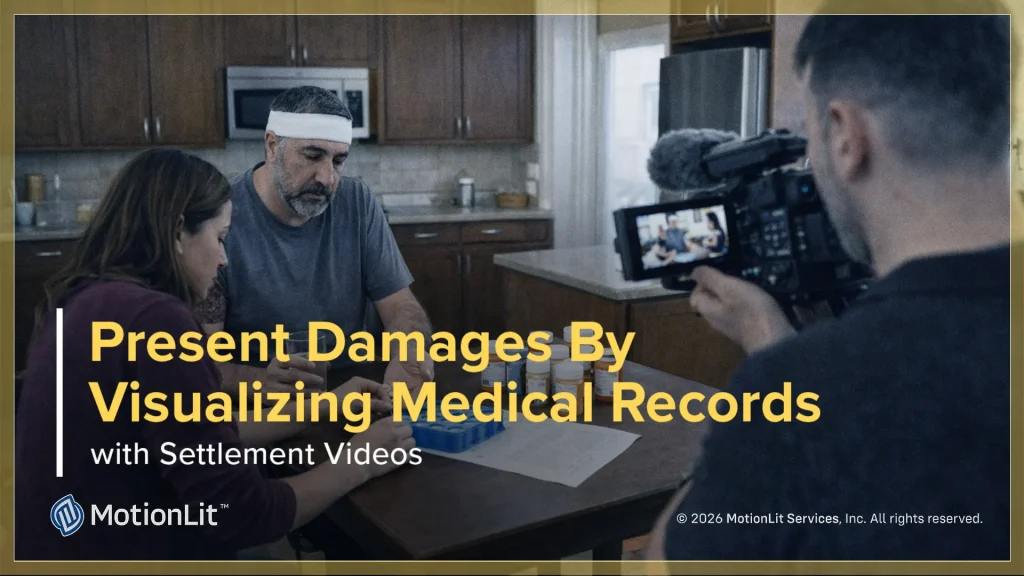
They capture everyday activities such as mobility, self-care, and routine responsibilities, showing how these tasks are completed within the context of the injury.
These videos demonstrate physical effort, the need for assistance, and the adjustments required throughout the day. Whether preparing a meal, attending appointments, or moving through the home, each moment provides meaningful insight into functional limitations.
Importantly, these visuals align with medical records and expert findings. They reflect the same limitations described in reports, now presented in a format that can be directly observed.
The result is an authentic portrayal of daily life that complements the documented medical narrative and reinforces the overall damages presentation.
Creating Emotional Understanding Through Visual Storytelling
Day-in-the-Life videos also provide context for the broader human impact of an injury.
They show how physical limitations influence daily interaction, communication, and relationships. Jurors and adjusters are able to see how the injury affects not only function, but also engagement with family, work, and social environments.
These visuals may reflect changes in routine, reduced participation in activities, or increased reliance on others. They can also capture shifts in demeanor and the emotional weight associated with those changes.
Through observed moments and, when appropriate, interviews, these videos help communicate how the injury extends into all aspects of daily life.
This visual storytelling supports a deeper understanding of damages by connecting clinical findings to real-world impact in a relatable and meaningful way.
Strengthening Strategy in Settlement and Trial
Day-in-the-Life videos play an important role in how damages are presented across all phases of litigation.
They support the presentation of non-economic damages by framing pain, suffering, and loss of enjoyment through observable examples. This allows decision-makers to better understand the extent of the injury’s impact.
In mediation, these visuals help communicate damages during negotiation. In settlement demands, they reinforce the basis for valuation. In trial, they provide a structured and compelling way to present the effects of the injury.
When supported by both medical documentation and visual context, damages can be evaluated with greater depth and consideration.
Reinforcing Expert Testimony with Visual Context
Day-in-the-Life videos work in tandem with expert analysis to strengthen case presentation.
They align with medical opinions, life care plans, and vocational assessments by providing visual context that reflects those findings. Experts are able to reference observable examples that support their conclusions.
This alignment enhances consistency across testimony and exhibits.
It also supports credibility by demonstrating that expert opinions are grounded in real-world conditions. The presentation becomes more cohesive, with each component reinforcing the overall damages narrative.
In addition, the use of these visuals reflects a well-prepared and thoughtfully developed case strategy.
How Visuals Influence Case Value
A clear and comprehensive understanding of damages supports appropriate case valuation.
When the full scope of physical limitations and lifestyle changes is presented, it becomes easier to evaluate compensation in a way that reflects both present and future needs.
Day-in-the-Life videos contribute to this process by presenting non-economic damages in a tangible and relatable format. Pain, suffering, and loss of enjoyment are demonstrated through real-world examples that align with life care planning and long-term care considerations.
This approach supports a more complete evaluation of damages and helps ensure that all aspects of the injury are considered during settlement and beyond.
Key Takeaways for Damages Presentation Strategy
Damages extend beyond medical documentation alone.
Day-in-the-Life videos provide additional context by showing how injuries affect daily function, independence, and personal relationships. They expand the damages narrative and support a more complete evaluation.
When integrated into case strategy, these visuals strengthen negotiation positioning and enhance presentation across mediation, settlement, and trial.
Together with medical records and expert analysis, they help ensure that the full impact of the injury is clearly communicated and properly considered.
Discover How to Strengthen Your Damages Presentation
Discover how Day-in-the-Life videos can support and strengthen your damages presentation.
Request a consultation to explore how visual storytelling can be integrated into your case strategy. Our team works alongside attorneys, medical experts, and litigation teams to develop visual presentations that align with your evidence and enhance how damages are communicated.
With over 25 years of experience supporting leading trial lawyers, we at MotionLit provide the visual tools that help bring the full scope of a case into focus for settlement and beyond.